Why so many North Idaho lake lots need one
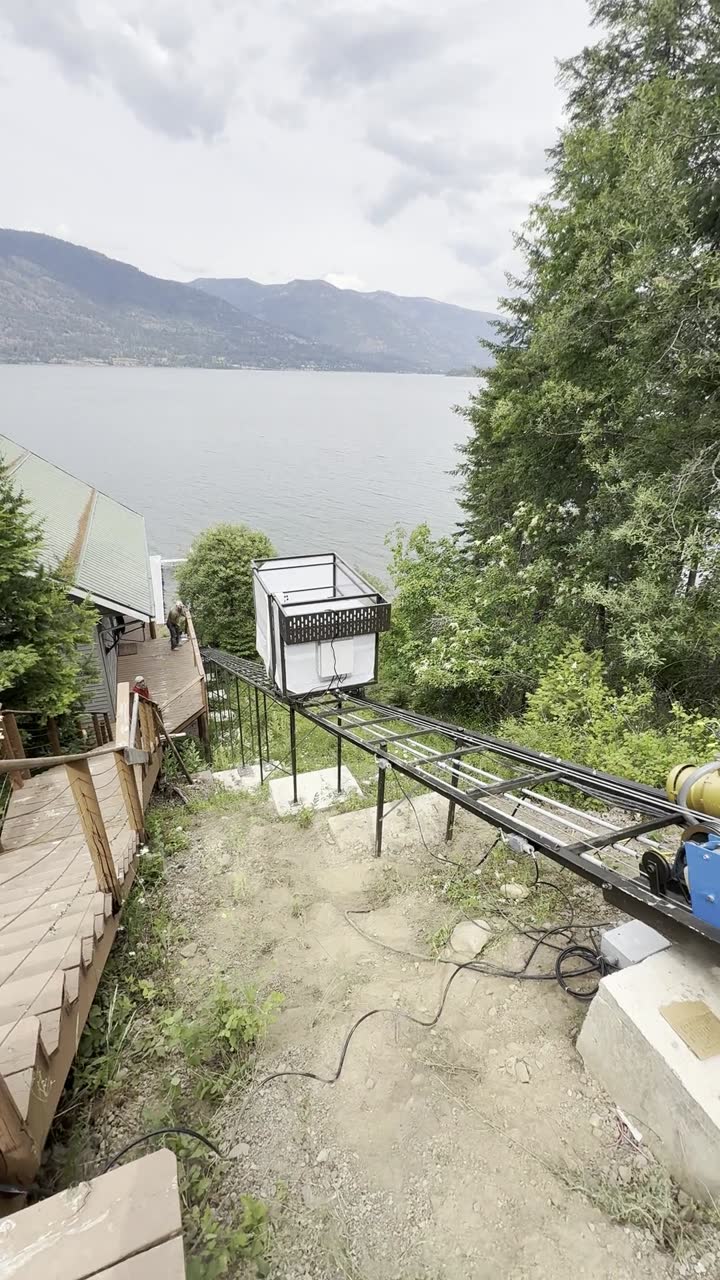
The lakes up here sit in deep, steep-sided basins. Lake Pend Oreille is Idaho's largest and deepest lake, and much of its shoreline, along with long stretches of Lake Coeur d'Alene, Hayden Lake and Priest Lake, rises sharply from the water. The view from the house is spectacular. The trip to the dock can be a hundred steps or more.
That's manageable for a while. It gets harder with age, with small kids, and every time you carry coolers, life jackets and groceries. A tram makes the waterfront usable for everyone.
What we look at on a site visit
- Slope and length. These set the track design, the drive and the car.
- Soil and rock. Footings have to hold on a hillside. Rock is solid but slow to drill; loose soil needs deeper or wider footings.
- Trees and roots. We route the track to save the trees you want to keep.
- Access. Can materials come down from the top, or is part of the site only reachable from the water? Some lake lots are much easier to build from a barge.
- Stops. House, deck, beach, dock: where do you actually want to get on and off?
Where the bottom station goes matters
Idaho requires an encroachment permit from the Idaho Department of Lands for structures built onto navigable lakes, like docks, boat garages and shoreline stabilization. A tram that ends on your own upland property generally stays out of that process. A design that extends onto the lakebed doesn't.
Kootenai and Bonner counties also have their own rules for building near the shoreline and on steep ground. We'll help you figure out what applies to your lot before the design is final.
Power and controls
The drive usually sits at the top station, close to the house and your electrical service. Each stop gets a call-send station so you can bring the car to you. Plan for a dedicated circuit and a route for wiring down the hill.
Use the fall drawdown
Lake Coeur d'Alene and Lake Pend Oreille are both lowered in the fall by the dams downstream. Lower water exposes more shoreline, which can make work near the bottom of a slope easier. It's one more reason fall and winter are good times to plan and build, so the tram is ready by summer.
Winter: run it or put it to bed
Some owners use their tram year-round. Many lake places sit quiet from October to May, and the tram gets shut down for the season. Either way, plan for it:
- Fall shutdown: clean the track, check cables and drive, cover the controls, park the car
- During winter: keep heavy snow off the car and top station if you can
- Spring start-up: full inspection and test before the first ride
Tram or outdoor stairlift?
| Outdoor stairlift | Hillside tram | |
|---|---|---|
| Best for | A short run of steps to a deck or beach | Long, steep slopes from house to dock |
| Riders | One seated rider | Several riders plus gear |
| Carries cargo | No | Yes: coolers, firewood, materials |
| Construction | Mounts on existing steps | Footings, track and stations |
| Timeline | Weeks | Several months |
How long does it take?
Expect several months from the first site visit to the first ride. Design, permits and site work take the most time. If you want to ride by Memorial Day, start the conversation in the fall.
Common questions
How steep can a tram go?
Much steeper than stairs or a ramp. Trams are designed for slopes that are hard to walk. The right design depends on your grade and run length, so we survey the lot before quoting.
Do I need a permit for a tram in Idaho?
Usually you'll need county building and electrical permits. If any part of the tram extends onto the lake, you'll also need an encroachment permit from the Idaho Department of Lands.
Can you build a tram where equipment can't drive in?
Often, yes. Materials can come down from the top of the lot, and on some lake properties it's easier to bring them in by water.
Do you service trams you didn't build?
Yes. We inspect, repair and do seasonal service on existing hillside trams.